Technology
Zoox Software Recall: Implications for Calibration Shops
Zoox recalls autonomous software after smoke-induced perception failures. We analyze the technical risks for independent tuners handling ADAS-integrated ECUs.
Zoox recalls autonomous software after smoke-induced perception failures. We analyze the technical risks for independent tuners handling ADAS-integrated ECUs.
Zoox, Amazon’s autonomous vehicle subsidiary, issued a software recall in July 2026 (NHTSA recall report 26E-044), which highlights a critical technical vulnerability in the logic of software-defined vehicles (SDVs). The NHTSA report says the software may not detect and respond to heavy smoke, particularly at active emergency scenes. On 20 June 2026 an unoccupied Zoox vehicle encountered heavy smoke over an active fire scene, entered it, braked hard and stopped; an updated software release followed on 15 July 2026. While the recall targets the automated driving system (ADS) software, the underlying failure mode—perception logic vs. environmental noise—serves as a primary case study for the independent ECU tuning and calibration industry as vehicles move toward integrated ADAS-performance architectures.
Understanding Sensor-Fusion Failures in Software-Defined Vehicles
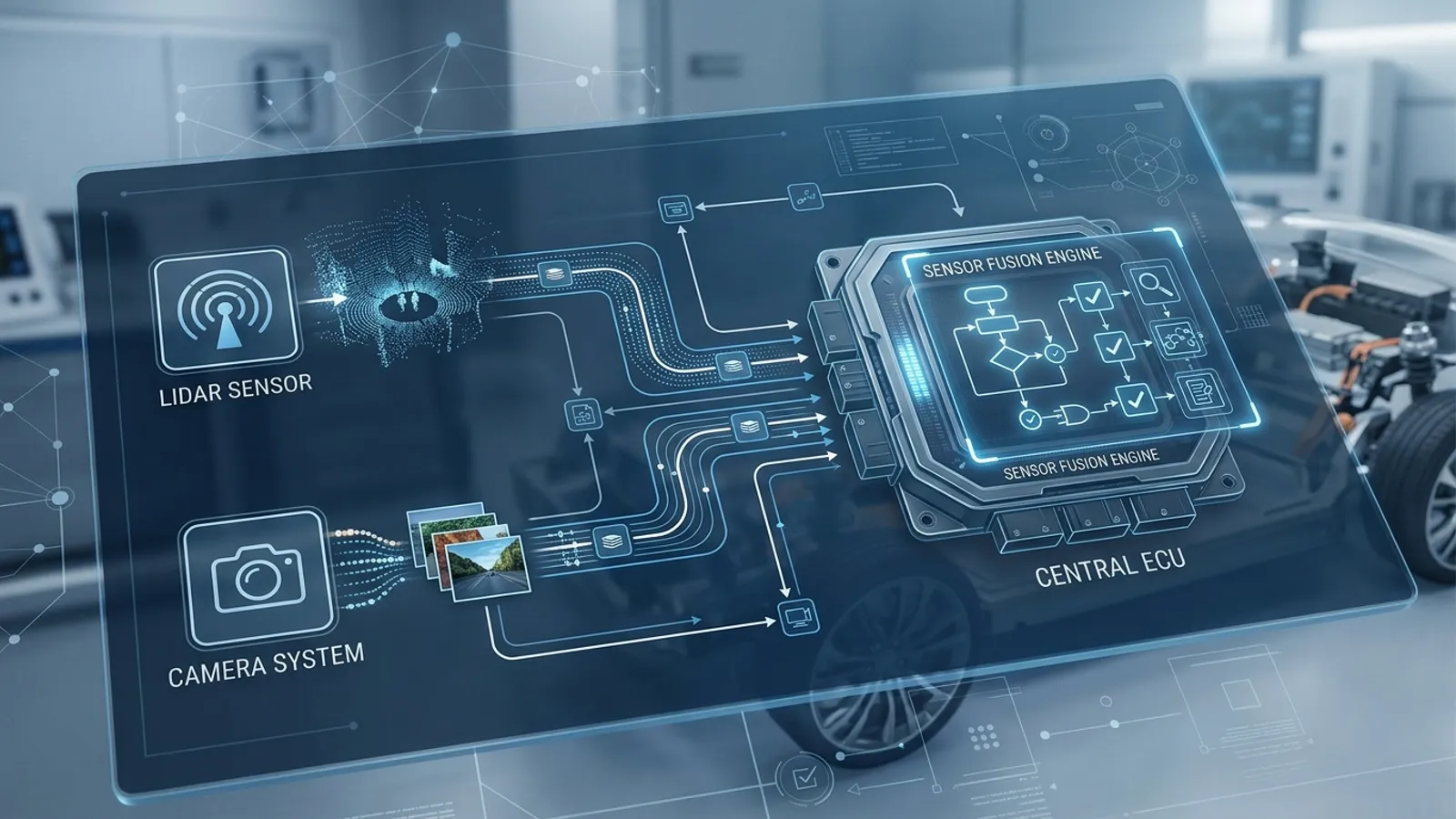
Modern vehicle architecture is increasingly reliant on sensor fusion, where data from Lidar, Radar, and Cameras are processed by a central ECU or Domain Control Unit (DCU) to create a real-time world model. The Zoox recall underscores the difficulty of 'edge cases'—uncommon environmental conditions like heavy smoke that mimic physical obstacles or obscure depth perception. For professional calibration engineers, this illustrates the fragility of proprietary perception algorithms. When a vehicle's software cannot distinguish between a solid object and a particulate cloud, the safety-critical response is triggered, often resulting in sudden braking or systemic shutdowns.
In the B2B tuning sector, understanding these logic chains is essential. As independent workshops move beyond simple fuel-and-ignition remapping toward holistic vehicle optimization, the interaction between power delivery and ADAS stability becomes a point of potential liability. If a tuner modifies the torque request logic or the throttle response in a vehicle where the ADAS system is calibrated to specific acceleration curves, the delta between the 'expected' vehicle behavior and the 'actual' modified behavior can lead to system errors or safety failures similar to those seen in the Zoox scenario.
The Intersection of Performance Remapping and ADAS Stability
Historically, ECU tuning focused on the Internal Combustion Engine (ICE) parameters. However, the current generation of European and North American vehicles utilizes integrated safety controllers that monitor lateral and longitudinal dynamics. The Zoox software failure demonstrates that even at the OEM level, software logic is susceptible to environmental variables. For the independent tuner, this means that every modification must be validated against the vehicle’s existing safety protocols. If a sensor-fusion system is already sensitive to atmospheric conditions, any modification that increases the complexity of the data processing or changes the vehicle’s response characteristics must be handled with extreme precision.
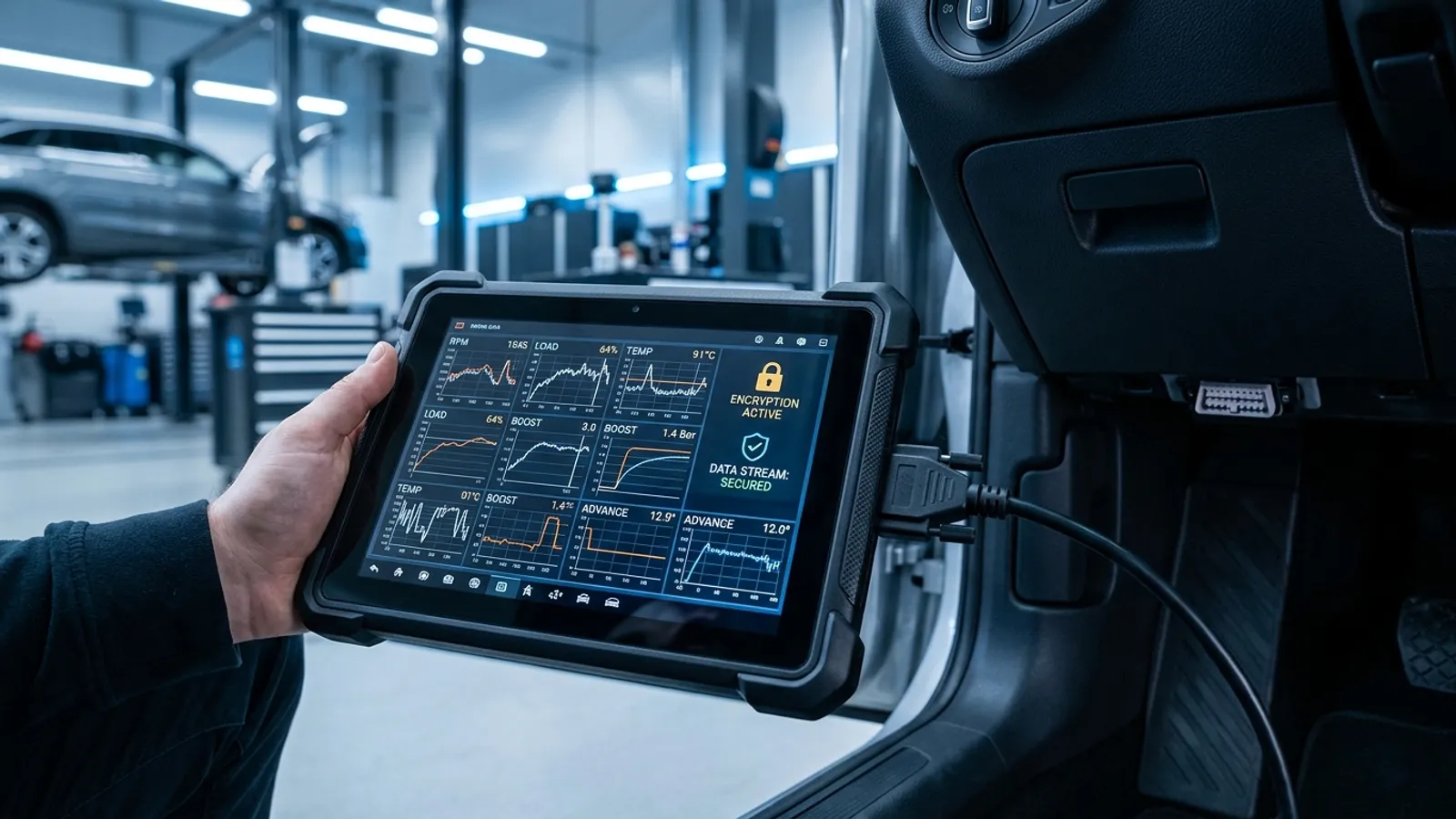
Professional workshops can explore our advanced feature sets to understand how modern diagnostic tools interact with these complex systems. The industry is shifting from 'performance shops' to 'software integration centers.' In this new environment, the ability to diagnose perception-log errors and understand the impact of recalibration on sensor-fusion triggers is a competitive necessity. The Zoox incident serves as a reminder that software is never 'finished'; it is a continuous cycle of deployment, failure-analysis, and recall-driven improvement.
Risk Management for Independent Calibration Specialists
The transition to EVs and autonomous-ready platforms introduces new risks for independent businesses. When an OEM like Zoox issues a software recall, it is a formal recognition of a logic error. If an independent tuner has modified the firmware of a vehicle that is subsequently involved in a similar perception-failure incident, the legal and technical burden of proof shifts. Calibration specialists must ensure that their workflows include comprehensive pre-and-post-modification logging of ADAS status codes. This level of technical due diligence is no longer optional for those operating at the high end of the market.
To support this transition, businesses should evaluate their subscription models to ensure they have access to the latest factory-equivalent technical data. Relying on outdated or generic files increases the risk of interfering with critical safety patches. As seen in the Zoox case, software updates are the primary mechanism for safety remediation. Tuners must be prepared to work alongside these updates, ensuring that custom calibrations do not block or revert essential OEM safety recalls. For those looking to test these integration workflows, a professional trial of advanced calibration software is recommended to establish a baseline for safety-critical diagnostics.
Technical Analysis: Particulate Interference and Logic Triggers
The NHTSA report says the software may not detect and respond to heavy smoke; it does not describe the sensor-level cause, so this analysis does not assume one. This highlights the importance of 'filtering logic' in ECU software. In performance tuning, we often deal with similar filtering issues—such as knock sensor sensitivity or traction control intervention thresholds. The Zoox recall shows that detection logic can fail to respond to a real hazard, so thresholds in either direction need validation under real-world conditions.
FAQ: Software Integrity and Independent Tuning
Q1: Does a Zoox recall affect standard passenger vehicle tuning?
A1: Directly, no. However, it signals a shift in how regulators and OEMs view software failures. Similar perception logic may exist in Level 2+ systems on other platforms; this recall does not verify that.
Q2: How can I ensure my tuning doesn't interfere with ADAS?
A2: Always perform a full system scan before and after calibration. Use tools that allow for the retention of OEM safety flags and avoid modifying modules responsible for sensor-fusion and perception logic.
Q3: Why did smoke specifically cause a software recall?
A3: The NHTSA report says the software may not detect and respond to heavy smoke, particularly at active emergency scenes. The remedy is a software update, released on 15 July 2026.
Q4: Should tuners stop working on vehicles with advanced ADAS?
A4: No, but the workflow must evolve. Tuners need to become proficient in functional safety standards and ensure their calibrations are compatible with the vehicle’s safety-critical software layers.