Technology
Continental and AWS Expanded Virtual ECU Tools in 2023
Continental announced vECU Creator on the CAEdge framework in August 2023, a virtual ECU tool with tuning implications.

Continental announced vECU Creator on the CAEdge framework in August 2023, a virtual ECU tool with tuning implications.
The technical landscape of engine control unit (ECU) development is undergoing a fundamental shift from hardware-centric processes to cloud-native, software-defined architectures. On 17 August 2023, Continental announced vECU Creator, a virtual ECU development tool within the Continental Automotive Edge (CAEdge) framework, with AWS as the cloud provider. At the time, the tool was presented as upcoming rather than as a shipped product. For the independent tuning and calibration industry, this move signals a departure from traditional bench-testing methodologies toward a future dominated by software-in-the-loop (SIL) and virtualized validation cycles.
Automotive software virtualization allows Tier 1 suppliers like Continental to decouple software functions from the physical microcontroller units (MCUs) they will eventually inhabit. By leveraging AWS’s high-performance computing (HPC) infrastructure, developers can simulate the behavior of complex vehicle systems long before physical prototypes are manufactured. This approach addresses the increasing complexity of modern Software-Defined Vehicles (SDVs), where the codebase often exceeds 100 million lines of code.
The CAEdge Framework and the Rise of Virtual ECUs
The core of the Continental-AWS partnership is the CAEdge platform, a modular hardware and software environment designed to streamline the development of automotive functions. In a traditional workflow, calibration engineers must wait for physical hardware—often referred to as "A-samples" or "B-samples"—to begin testing software logic. This dependency creates significant bottlenecks in the development lifecycle.
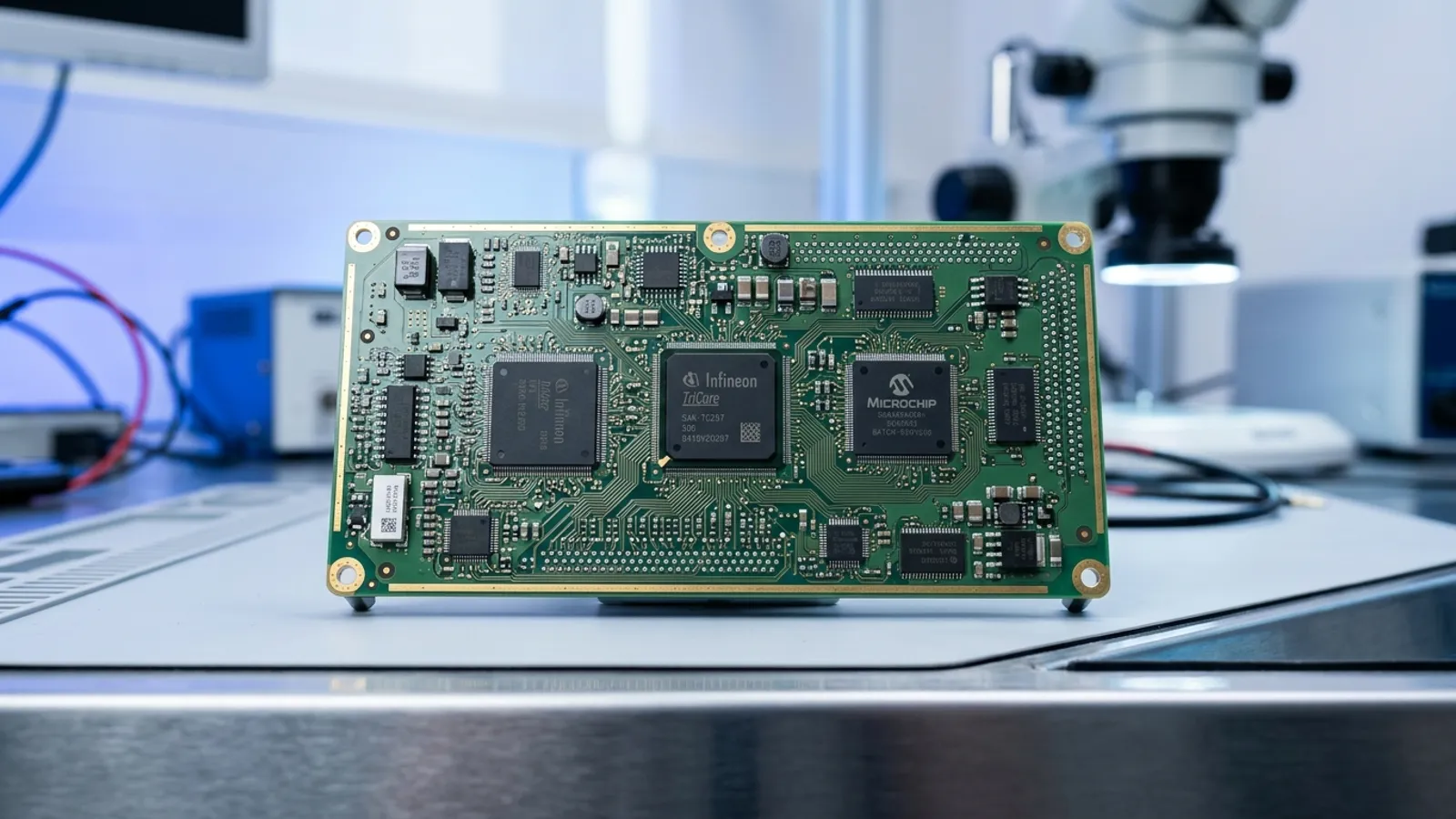
By virtualizing the ECU, Continental creates a "digital twin" of the hardware environment. This virtual ECU (vECU) enables developers to run code in a cloud-based environment that mirrors the target hardware's instruction set architecture (ISA). This is particularly relevant for the next generation of Continental platforms, such as those used in high-performance compute units and zone controllers. For professional tuners, understanding the shift toward vECUs is critical, as it defines how future map structures and security layers—such as those found in Continental’s Simos and SID families—will be architected and protected.
The virtualization process relies on AWS instances to simulate real-time operating systems (RTOS) and the underlying AUTOSAR (AUTomotive Open System ARchitecture) stack. This allows for massive parallel testing. Instead of one engineer testing a single ECU on a bench, thousands of automated test cases can be executed simultaneously in the cloud, identifying logic errors or calibration instabilities in a fraction of the time.
Implications for Independent Calibration and Tuning Workflows
The acceleration of software development at the OEM and Tier 1 level has a direct downstream impact on the independent aftermarket. As Continental moves toward more agile, cloud-integrated development, the frequency of software updates—delivered via Over-the-Air (OTA) mechanisms—is expected to increase. This shift necessitates a change in how tuning businesses approach versioning and software compatibility.
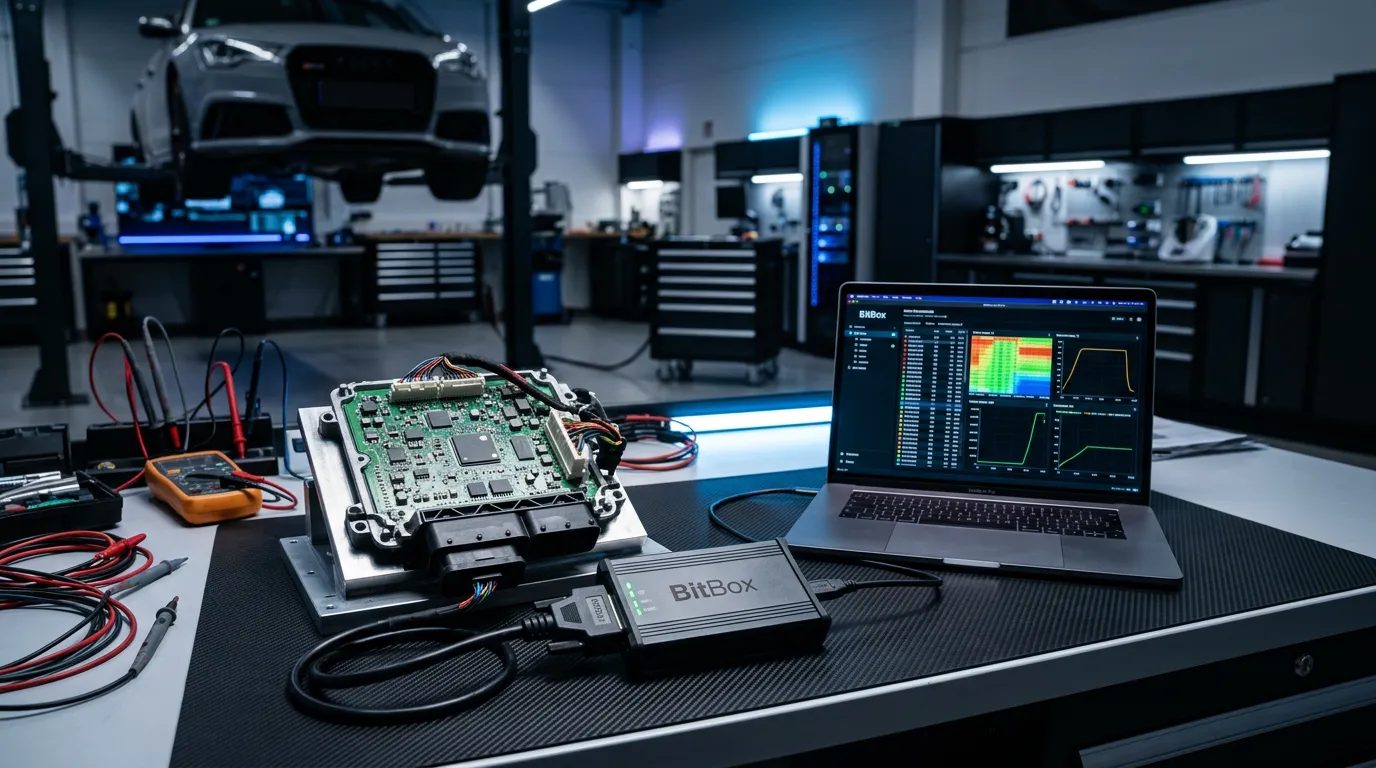
When software is developed and validated in a virtual environment, the delta between various firmware versions can become more complex. Tools and features traditionally used for physical ECU modification, such as those highlighted in our ETP feature set, must evolve to address the abstraction layers introduced by virtualization. The move to cloud-based development often accompanies a move toward more centralized vehicle architectures, where functions previously distributed across multiple small ECUs are consolidated into a single, high-performance domain controller.
Furthermore, the use of AWS infrastructure allows Continental to implement more robust security protocols during the development phase. Virtualized environments enable the testing of encryption and Secure Boot sequences against a wider array of simulated attack vectors. For the tuning community, this means that the security gates encountered in future Continental units will likely be more sophisticated, having been hardened in a virtual "sandbox" before ever reaching the production line.
Virtualization and the Future of Performance Validation
While physical dyno testing remains the gold standard for final performance validation, the preliminary stages of calibration are increasingly moving into the virtual realm. Continental’s use of AWS tools suggests that "environmental parity"—the concept that the development environment should perfectly match the production environment—is now a priority.
For independent calibrators, this raises the question of whether virtualized simulation tools will eventually become accessible for aftermarket performance optimization. Currently, the barrier to entry for high-fidelity ECU simulation is significant, requiring deep access to proprietary hardware abstraction layers (HALs). However, as the industry standardizes around platforms like CAEdge, the methodology for interacting with ECU logic may become more standardized, albeit more technologically demanding.
The transition to SDVs also changes the nature of what is being "tuned." In a virtualized architecture, performance gains may not only come from adjusting ignition timing or boost pressure but from optimizing how different software modules interact within the virtualized stack. This requires a shift in expertise from pure mechanical understanding to a more comprehensive grasp of embedded software systems and cloud integration.
Challenges in the Transition to Cloud-Native Automotive Software
Despite the efficiencies gained through the Continental-AWS partnership, the transition is not without hurdles. One of the primary challenges is ensuring real-time latency requirements are met when simulating vehicle functions in the cloud. Automotive control loops, particularly those governing engine dynamics and safety-critical systems, operate on microsecond scales. Replicating this timing accuracy in a virtualized, non-deterministic cloud environment requires highly specialized software wrappers.
Additionally, the integration of legacy systems into a modern cloud-native framework presents difficulties. Many existing ECU functions were designed for specific hardware constraints that do not exist in the cloud. Continental must carefully port these functions to the CAEdge platform without altering their fundamental behavior—a process known as "bit-exact" simulation. For the tuning industry, this ensures that the maps and logic tables found in a production ECU still correlate to the documentation and patterns established in previous generations.
For businesses looking to stay ahead of these architectural shifts, exploring professional development pathways is essential. Resources such as the ETP trial offer a look into how modern tools handle increasingly complex ECU datasets in an era where software is no longer a static component but a dynamic, cloud-managed asset.
FAQ: Automotive Software Virtualization
What is a virtual ECU (vECU)?
A vECU is a software-based representation of a physical engine control unit. It allows developers to run and test ECU software on standard PC or cloud hardware (like AWS) rather than requiring the physical automotive hardware.
How does the Continental-AWS partnership affect aftermarket tuning?
The partnership accelerates the development of Software-Defined Vehicles (SDVs). This leads to more frequent OTA updates and more centralized, secure ECU architectures, which require tuners to use more advanced software-interfacing tools.
Will physical ECUs disappear?
No, physical hardware is still required to execute commands in the vehicle. However, the development, testing, and calibration of the software that runs on that hardware are moving to virtual environments to save time and cost.
What is CAEdge?
Continental Automotive Edge (CAEdge) is a full-stack hardware and software framework developed by Continental and AWS. It provides the infrastructure needed to develop, deploy, and manage automotive software in a cloud-native environment.