Technology
Ridgeview’s £545m Pinewood Bid: Shaping Workshop Data Access
Ridgeview made a £545m take-private approach for Pinewood Technologies in late July 2026, a software consolidation move that affects independent tuners.

Ridgeview made a £545m take-private approach for Pinewood Technologies in late July 2026, a software consolidation move that affects independent tuners.
The automotive software landscape is undergoing a significant consolidation phase as private equity interest intensifies around Dealer Management Systems (DMS) and asset intelligence platforms. In late July 2026, Ridgeview Capital and its partners made a non-binding £545 million take-private approach for Pinewood Technologies, a key player in the automotive retail software sector. This move, alongside Bridgepoint’s acquisition of an unnamed asset intelligence business, highlights a broader trend: the centralisation of vehicle data and workshop management ecosystems.
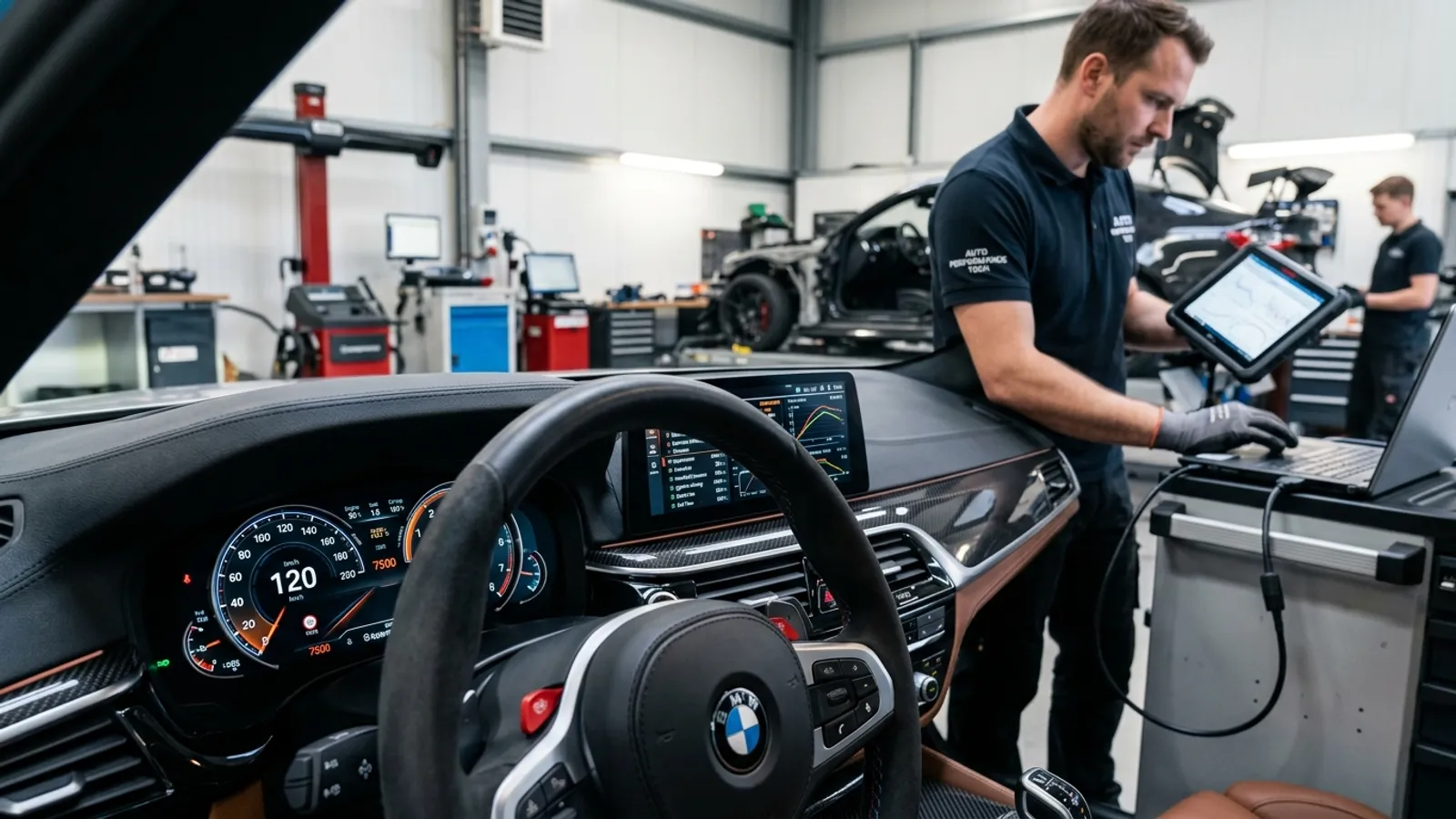
For the independent tuning sector, these multi-million pound transactions are not merely financial headlines. They represent the evolving infrastructure of the 'connected workshop.' As companies like Pinewood transition from public listing to private equity ownership, the focus typically shifts toward accelerated SaaS (Software as a Service) monetisation and tighter integration of vehicle lifecycle data. For independent specialists, understanding how these platforms gate-keep diagnostic access and digital service records is becoming as critical as the calibrations themselves.
The Mechanics of the £545m Ridgeview Offer
The approach from Ridgeview for Pinewood Technologies marks a definitive shift for the company, which recently emerged as a pure-play software entity following the sale of Pendragon’s motor and leasing divisions to Lithia Motors. The £545 million valuation reflects the high premium placed on proprietary automotive data and the recurring revenue models inherent in modern DMS platforms. Pinewood’s software is used extensively by franchised dealers to manage everything from workshop scheduling to manufacturer-integrated diagnostic logs.
In the B2B tuning environment, the efficiency of a workshop often hinges on its ability to interface with such systems. While many independent tuners operate outside the primary dealer network, the increasing requirement to update Digital Service Records (DSR) and verify software versions against OEM databases means that the tools provided by companies like Pinewood are the gatekeepers of a vehicle's digital history. A shift to private ownership often precedes a more aggressive 'platform-as-a-service' model, potentially impacting how third-party integrations are priced and managed.
For businesses looking to scale their operations, exploring integrated tuning workflow features can provide a necessary buffer against the siloed data models often favoured by large-scale DMS providers. As the industry moves toward a more data-centric approach, the ability to maintain independent, verifiable records of vehicle modifications and performance enhancements becomes a competitive necessity.
Consolidation and the Independent Tuning Barrier
The acquisition activity involving Bridgepoint and Ridgeview underscores a strategic interest in 'asset intelligence.' In the context of performance tuning, 'assets' are the vehicles themselves and the granular data they generate. When private equity firms consolidate these software providers, they are essentially betting on the future value of automotive data control. This presents a dual-edged sword for the independent aftermarket.
On one hand, professionalisation leads to better software stability and more robust API infrastructures, which can theoretically allow for smoother data exchange between tuning tools and workshop management systems. On the other hand, consolidation often leads to 'walled gardens' where access to vehicle modules or the ability to write service history is restricted to those within a specific paid ecosystem. For the high-end tuning professional, the risk is not just about losing access to a tool, but about the rising cost of the digital handshake required to prove a vehicle has been maintained according to standard while under a performance calibration.
Independent businesses must now evaluate their software stack with the same rigour they apply to their dyno hardware. The trend suggests that free or low-cost access to vehicle data is being replaced by subscription-heavy models that favour large dealer groups. Tuners who rely on manual record-keeping may find themselves increasingly disconnected from the digital ecosystems that consumers—and insurers—now expect as standard.
The Strategic Shift Toward Asset Intelligence
Bridgepoint’s move into asset intelligence further confirms that the value in the automotive sector has moved from the hardware to the insights derived from it. In the tuning world, asset intelligence translates to the ability to monitor engine health, track calibration changes across a fleet, and predict maintenance needs based on real-world usage. As these software platforms become more sophisticated, the 'stock' vs. 'tuned' visibility for manufacturers and dealers becomes clearer.
This transparency requires tuners to be more diligent in their documentation and more technical in their approach to diagnostic communication. When a company like Pinewood is backed by significant private equity capital, its development roadmap will likely include enhanced connectivity features that link a vehicle’s software state directly to its resale value and warranty status. For the tuning industry, this means that the 'stealth' era of modifications is rapidly closing, replaced by a need for professional, transparent, and technically sound calibration services that can stand up to the scrutiny of an integrated digital record.
To navigate this transition, firms should consider how their current service offerings align with evolving data standards. Investigating tiered service models can help businesses manage the increasing overhead of diagnostic subscriptions and data access fees that these consolidated software giants are likely to implement.
FAQ: Automotive Software Consolidation
How does the Pinewood takeover affect my tuning business?
While the immediate impact is minimal, the long-term trend involves the consolidation of workshop data. This may lead to higher costs for accessing Digital Service Records (DSR) or more restrictive diagnostic interfaces that independent tuners rely on to clear codes or log vehicle performance.
What is 'Asset Intelligence' in the context of tuning?
Asset intelligence refers to the collection and analysis of vehicle data to track its condition, performance, and history. For tuners, this means the software used by dealers is becoming better at identifying non-standard calibrations and tracking how those changes affect the vehicle’s overall lifecycle.
Should independent tuners switch to a DMS like Pinewood?
Large-scale DMS platforms are often designed for franchised dealers. However, as these companies expand under private equity, they may offer modules more suited to independents. The key is to ensure any software you adopt allows for the flexible data entry required for performance-related modifications.
Will this move make OEM software more difficult to bypass?
The move toward private equity ownership generally focuses on data monetisation and platform security. This often results in more robust 'Security Gateway' (SGW) implementations and more rigorous authentication protocols for any software attempting to communicate with the vehicle’s ECUs.