Technology
Nissan and Honda Software Collaboration (2025): ECU Tuning Impact
Nissan and Honda ended merger talks in February 2025 but kept working together on EVs and software. Shared software would change ECU security and protocols.
Nissan and Honda ended merger talks in February 2025 but kept working together on EVs and software. Shared software would change ECU security and protocols.
Nissan and Honda ended merger talks in February 2025 (Autobuzz, 14 February 2025), but said they would keep collaborating on EV and software development. If that work moves toward shared software, it could shift Japanese automakers away from fragmented proprietary systems toward a unified Software-Defined Vehicle (SDV) architecture. For the independent ECU tuning sector, this collaboration may be more than a corporate realignment; it could be a technical signal that the barriers to entry for vehicle calibration could become standardized across two of the world’s largest brands. If these manufacturers consolidate their software development to compete with tech-first entities, the protocols, encryption layers, and gateway architectures used in Nissan and Honda vehicles could converge.
Software Collaboration After the Merger Talks
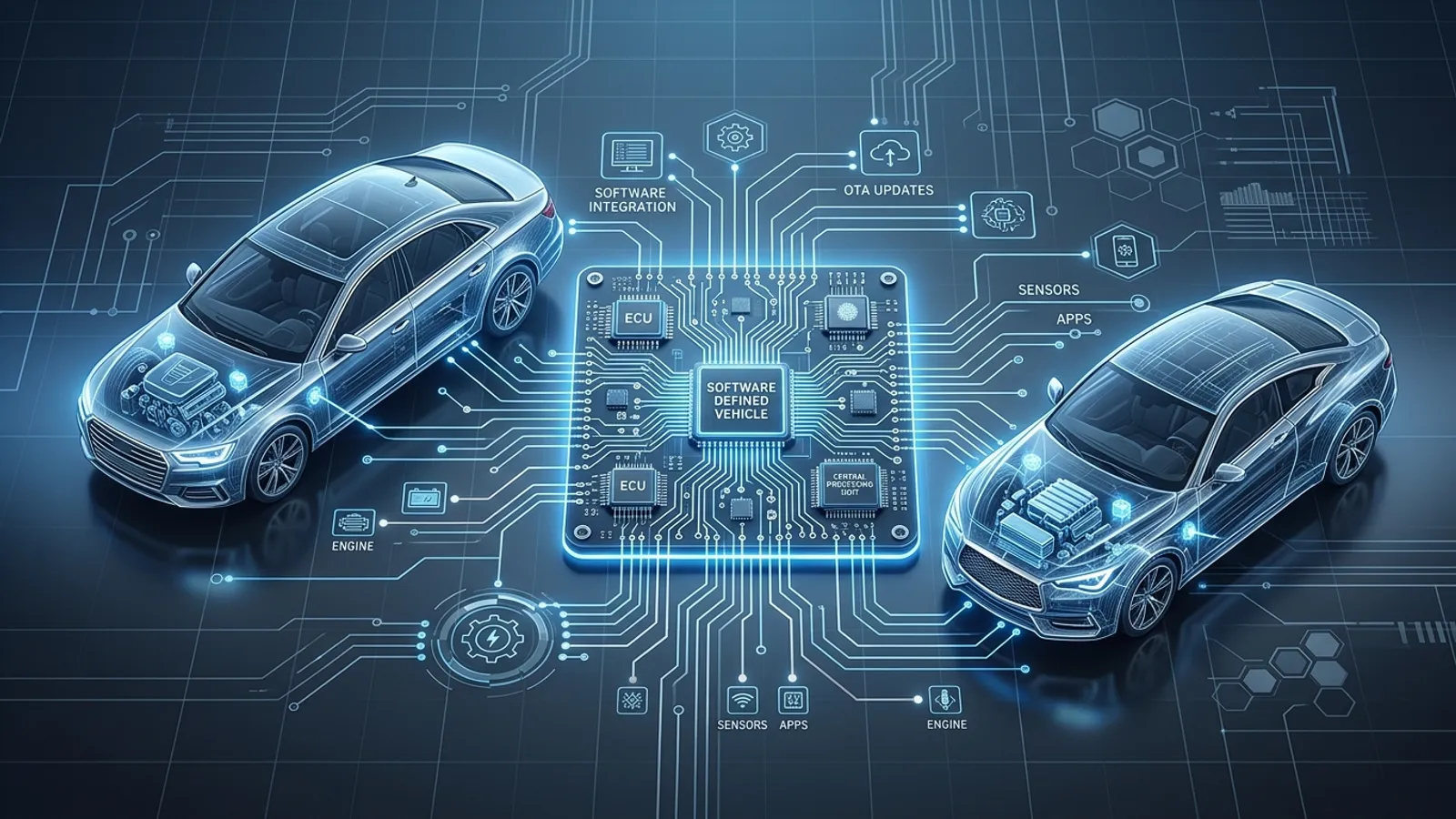
No specific shared roadmap is confirmed in this article, so the points below are scenarios. A shared operating system (OS) and standardized electronic control units (ECUs) would be the main route to a common architecture. For decades, Nissan (primarily using Hitachi and Bosch hardware) and Honda (utilizing Keihin and Continental systems) maintained distinct logic structures. A shared SDV framework would imply that future models could feature a centralized high-performance computer (HPC) rather than dozens of isolated micro-controllers.
For calibration professionals, this shift changes the fundamental approach to performance optimization. In a traditional architecture, a tuner targets specific tables within a standalone Engine Control Module (ECM). In an SDV environment, engine management is often a software function running on a multi-domain controller. If Nissan and Honda successfully unify their underlying software layers, it is highly probable that the aftermarket will see a homogenization of tuning protocols. While this may simplify tool development in the long term, the initial transition will require significant investment in understanding new abstraction layers between the hardware and the functional software.
Implications for ECU Security and Protocol Development
A likely driver for any Nissan Honda software work is cost reduction in the face of rising R&D requirements for electrification and autonomous driving. However, a byproduct of shared software is a shared security infrastructure. We have already observed this trend in the European market with the VAG (Volkswagen Audi Group) platform, where a single security gateway (SFD) or encryption logic is deployed across multiple brands. If Nissan and Honda adopt a similar approach, the independent tuning industry must prepare for a unified 'Japanese Gateway' that could control access to diagnostic and calibration functions for both brands simultaneously.
Technical challenges for tuners will likely include:
- Centralized Authentication: Transitioning from brand-specific seed-key algorithms to cloud-based authentication protocols common in SDV architectures.
- End-to-End Encryption: The use of Message Authentication Codes (MAC) on the CAN-FD bus to prevent unauthorized modification of torque requests and fueling parameters.
- Shared Logic Maps: A move toward standardized map structures, potentially making knowledge of one brand directly transferable to the other, provided the security layer is bypassed.
Workshops currently evaluating their technical stack can explore our platform features to understand how modern protocols are integrated into current workflows. Shared software work between the two brands could make high-level software abstraction as important as mechanical engine knowledge.
The Role of Unified Operating Systems in the Aftermarket
A shared OS that can be updated over-the-air (OTA) would be a proprietary platform, and pooling resources could make it resilient and scalable. For the tuning market, OTA updates present a recurring challenge: the potential for 're-flashing' a tuned vehicle back to stock parameters during a routine manufacturer software patch. If Nissan and Honda use a common OS, the frequency and impact of these updates will likely increase, necessitating a more robust 're-tuning' support model for independent businesses.
Furthermore, this partnership could lead to standardized hardware interfaces. In the past, a Nissan Z and a Honda Civic Type R required vastly different diagnostic interfaces and protocols (CONSULT-III vs. HDS). A shared software stack brings the industry closer to a reality where a single J2534-compliant interface can handle deep-level calibration across both brands with minimal variation in the software environment. To stay ahead of these shifts, professionals should consider a trial of our latest protocol analysis tools to benchmark their current capabilities against emerging SDV standards.
Strategic Outlook for Independent Tuning Businesses
If Nissan and Honda consolidate their digital footprints, the independent aftermarket must avoid being siloed by brand specialization. The technical convergence of these two giants suggests that future profitability will lie in the ability to master 'platform tuning' rather than 'brand tuning.' This transition requires a shift in mindset from being a mechanic with a laptop to becoming a software integration specialist.
Investment in training and hardware that supports high-speed data logging and ethernet-based communication (DoIP) is no longer optional. Shared software work between Nissan and Honda would be a sign that the era of isolated, hardware-bound ECUs is ending. Businesses that fail to adapt to the SDV model will find themselves locked out of the next generation of performance vehicles. For those looking to scale their operations in this new environment, reviewing our enterprise pricing models can provide the necessary framework for scaling technical access across a larger fleet of supported vehicles.
Frequently Asked Questions
Will this partnership make it impossible to tune future Nissan and Honda models?
While shared software architectures often include more robust security gateways and encryption, they do not make tuning impossible. Instead, they change the method of access. Tuners will likely need to utilize more sophisticated tools that can handle cloud-based authentication and complex checksum calculations within a unified OS.
How soon will we see the results of the Nissan-Honda software collaboration in production?
Software development cycles in the automotive industry typically span 24 to 36 months for significant OS integration. It is expected that the first generation of shared-platform vehicles will begin appearing in the late 2020s, with a gradual phase-in of unified ECU architectures across their respective EV and hybrid lineups.
Does this mean Nissan and Honda will use the same engines?
The February 2025 statement covers EV and software development. No engine or powertrain sharing is confirmed in this article. While they may share electric drive units (EDUs) in the future, a shared digital ecosystem is the likely focus. However, even with different engines, the control logic and calibration protocols would likely be standardized under a shared OS, if one is adopted.
Will existing tuning tools work on such shared platforms?
Current-generation tools for Nissan and Honda are designed for legacy architectures. If a shared OS is deployed, tool manufacturers will need to develop new protocols. Standardized software between the two brands may actually benefit the aftermarket by allowing tool developers to focus on one primary system for two major manufacturers, potentially speeding up the release of new tuning solutions.