Technology
Navigating the Move to Service-Oriented Vehicle Diagnostics
Vector introduces a toolchain supporting service-oriented vehicle diagnostics, enabling independent tuners to interface with next-generation vehicle architectures.
Vector introduces a toolchain supporting service-oriented vehicle diagnostics, enabling independent tuners to interface with next-generation vehicle architectures.
Service-oriented vehicle diagnostics (SOVD) represents a fundamental shift in how independent performance professionals and diagnostic engineers interact with modern vehicle architectures. As the industry moves toward Software-Defined Vehicles (SDVs), the traditional reliance on Unified Diagnostic Services (UDS) over Controller Area Network (CAN) is being supplemented, and in some cases replaced, by API-based communication. The recent launch of a dedicated toolchain by Vector aims to provide the necessary infrastructure for this transition, ensuring that diagnostic access remains viable as vehicle complexity increases.
The Technical Shift from UDS to SOVD
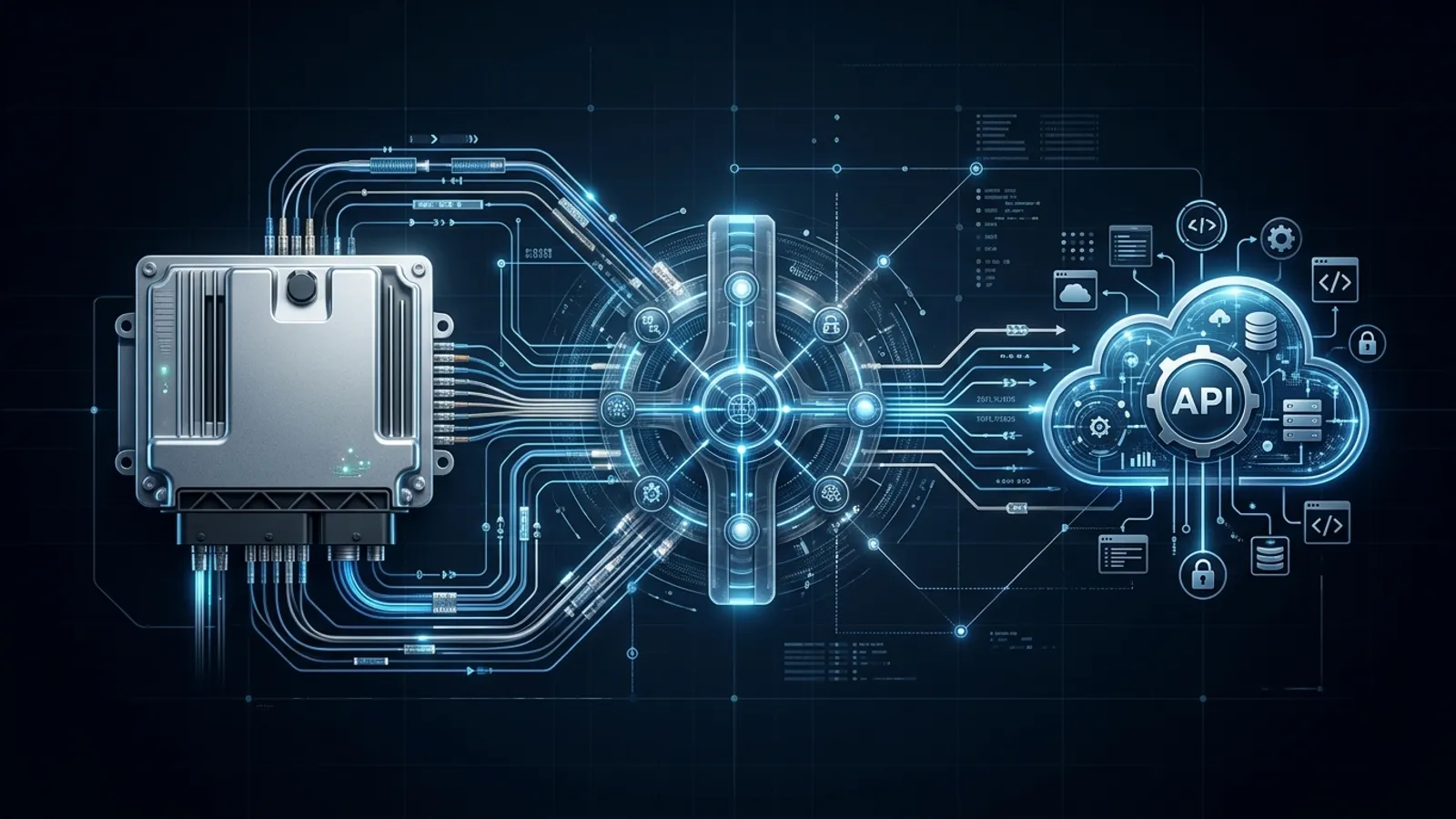
For decades, the diagnostic landscape has been dominated by ISO 14229 (UDS). While highly effective for signal-based communication, UDS faces limitations in the context of high-performance computing (HPC) platforms and Ethernet-based backbones common in modern EVs and luxury ICE platforms. Service-oriented vehicle diagnostics, standardized under ASAM SOVD, introduces a RESTful API approach. This allows diagnostic testers to communicate with the vehicle using standard internet protocols such as HTTP and JSON.
The transition is not merely a change in language but a change in architecture. In a traditional setup, a diagnostic tool must know the specific memory address or localized DID (Data Identifier) to request information. In an SOVD environment, the vehicle provides a service discovery mechanism. This allows the tool to query available 'services'—such as battery health monitoring or thermal management calibrations—without requiring the granular, low-level knowledge of the underlying ECU’s memory map. For the independent tuning sector, understanding this abstraction layer is critical for maintaining workflow continuity.
Vector’s updated toolchain addresses these complexities by integrating SOVD support across its primary platforms, including CANoe and Indigo. This enables engineers to validate diagnostic services during the development phase and provides a template for how aftermarket tools may eventually interface with these systems. Performance shops looking to optimize their workflow should explore our advanced feature set to understand how current tools bridge the gap between legacy protocols and modern standards.
Vector Toolchain Integration and Workflow Optimization
The implementation of service-oriented vehicle diagnostics requires a robust software stack capable of handling heterogeneous communication. Vector’s toolchain simplifies this by providing a unified interface for both legacy UDS and new SOVD protocols. This is particularly relevant for businesses involved in complex retrofits or high-end performance calibration where multiple vehicle generations may be serviced simultaneously.
One of the primary advantages of the Vector approach is the decoupling of the diagnostic application from the underlying communication protocol. When a technician initiates a diagnostic request, the toolchain manages the translation between the high-level service request and the specific Ethernet or CAN frames required by the vehicle. This reduces the risk of communication errors and streamlines the identification of faults in complex, multi-domain architectures. For businesses evaluating their current diagnostic overhead, viewing our transparent pricing models can help in planning for the necessary hardware and software upgrades required for SDV compatibility.
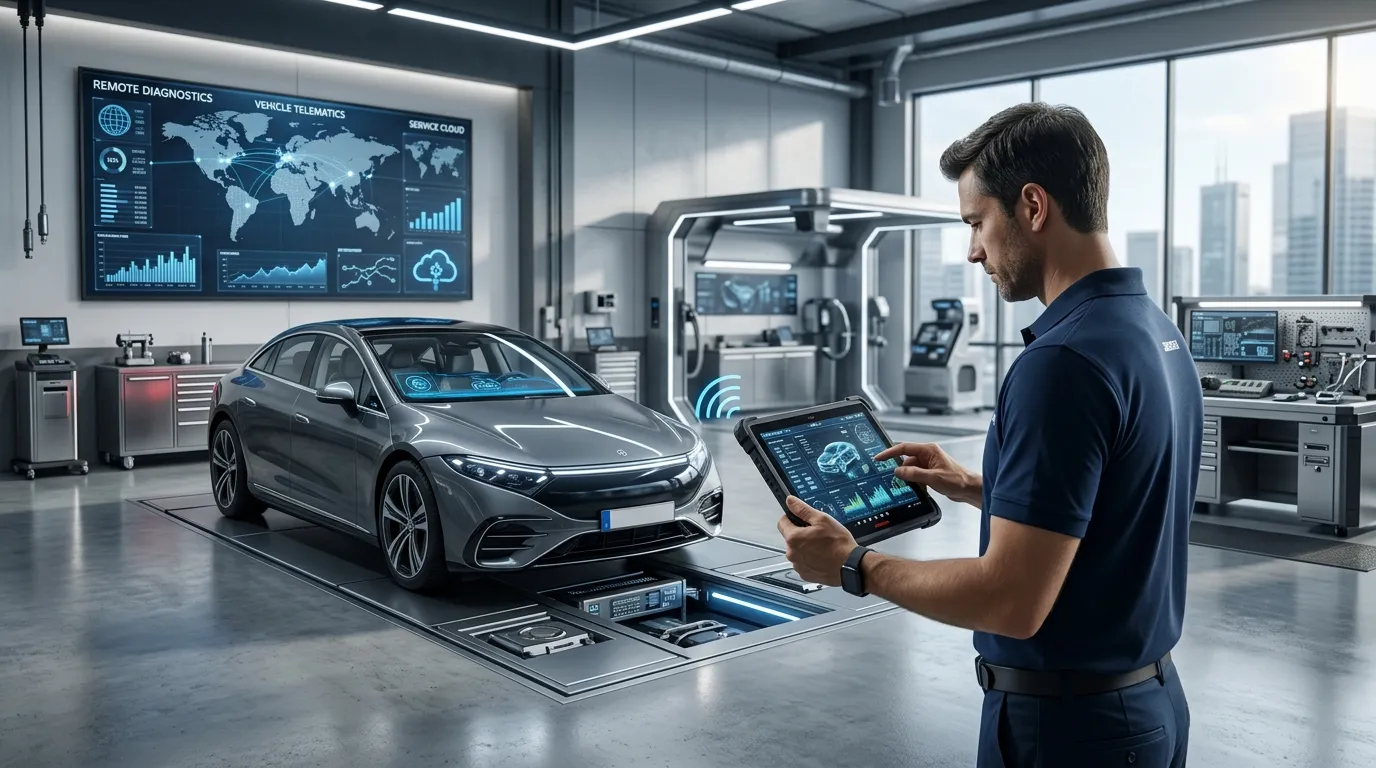
Furthermore, the move toward SOVD facilitates remote diagnostics. Because the protocol is based on standard web technologies, it is inherently more compatible with cloud-based diagnostic platforms. This allows for 'over-the-air' (OTA) style diagnostic sessions where a specialist can analyze vehicle data from a secondary location without specialized proprietary hardware at every touchpoint. This flexibility is a key driver for independent workshops looking to expand their service reach in an increasingly digital market.
Impact on Independent Performance and Calibration
The introduction of SOVD toolchains marks a pivotal moment for the independent tuning industry. As manufacturers lock down E/E architectures, the ability to utilize standardized, service-oriented interfaces may become the only legitimate pathway for diagnostic access. Vector’s involvement in the ASAM SOVD standard ensures that the tools available to the market are aligned with OEM development cycles.
For calibration professionals, SOVD offers a more structured way to access live data. Instead of decoding raw hex streams, users can interact with structured JSON data, which includes metadata about the values being read. This reduces the 'guesswork' often associated with identifying new parameters in updated ECU firmware. However, this shift also requires a higher level of IT literacy within the workshop, moving from basic serial communication knowledge to an understanding of web-based APIs and network architecture.
To ensure your facility is prepared for these shifts, we recommend starting a comprehensive trial of our latest diagnostic integration modules. This allows your team to familiarize themselves with the evolving data structures before SOVD-exclusive vehicles become a standard presence in your service bays. The goal is to move from a reactive diagnostic posture to a proactive, service-oriented approach that leverages the full potential of modern vehicle data throughput.
Frequently Asked Questions
What is the main difference between UDS and SOVD?
UDS (Unified Diagnostic Services) is a signal-based protocol typically used over CAN or DoIP, requiring specific knowledge of identifiers and memory addresses. SOVD (Service-Oriented Vehicle Diagnostics) uses an API-based approach (HTTP/JSON), allowing for service discovery and a more abstracted interaction with the vehicle's functions.
Will SOVD replace the OBD-II port?
While the physical OBD-II port may remain for regulatory compliance (primarily emissions), the communication protocol used through that port is shifting toward Ethernet-based SOVD for non-emissions related diagnostics and performance data.
Do I need new hardware for Vector SOVD tools?
SOVD typically requires hardware capable of high-speed Ethernet communication (DoIP). While some existing Vector interfaces support this, the software toolchain (CANoe, Indigo) must be updated to the latest versions to handle the new service-oriented diagnostic layers.
Is SOVD more secure than traditional diagnostics?
Yes, because SOVD is based on standard web protocols, it can easily incorporate established security measures such as TLS encryption and OAuth-based authentication, making it more resilient than traditional unsecured CAN bus communications.
How does SOVD affect tuning?
SOVD changes how diagnostic data is read and how certain routines (like adaptation or basic settings) are triggered. It provides a more structured data environment, which can simplify the logging process once the initial API connection is established.