Guide
DPF Delete, EGR Off, AdBlue SCR Solutions: A Technical Guide
How DPF, EGR and AdBlue/SCR systems work and fail, what an emission-off calibration changes, and why removing them on a road vehicle is illegal.
How DPF, EGR and AdBlue/SCR systems work and fail, what an emission-off calibration changes, and why removing them on a road vehicle is illegal.
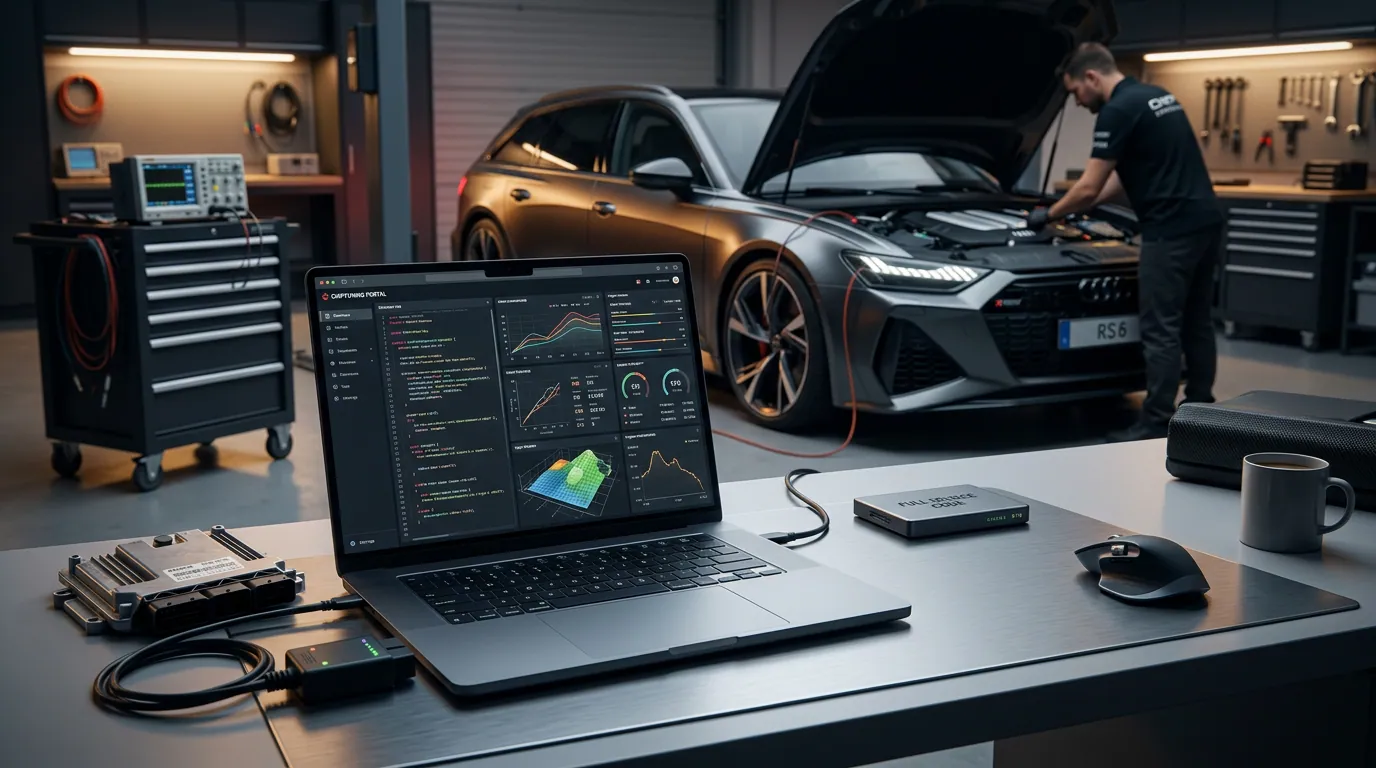
Removing or disabling a DPF, EGR valve or AdBlue/SCR system on a vehicle used on public roads is illegal in the EU, the UK, the US and most other markets. This guide explains how these systems work, why they fail and what a calibration changes, so that it serves diagnosis and repair on road vehicles; emission-off calibrations belong only on off-road and motorsport vehicles that never drive on public roads. For dealers using the ECU Tuning Portal software, this background helps answer customers correctly.
Why Emission Systems Fail and Why Repair Comes First
Diesel Particulate Filters (DPF) clog, EGR valves carbon up and Selective Catalytic Reduction (SCR) systems fail, and the repair bills are high. On a road vehicle the answer is diagnosis and repair: find the cause (short trips, a faulty sensor, an injector, a failed urea pump or heater), clean or replace the part and keep the system working. A calibration that removes the system is not a repair for a road vehicle.
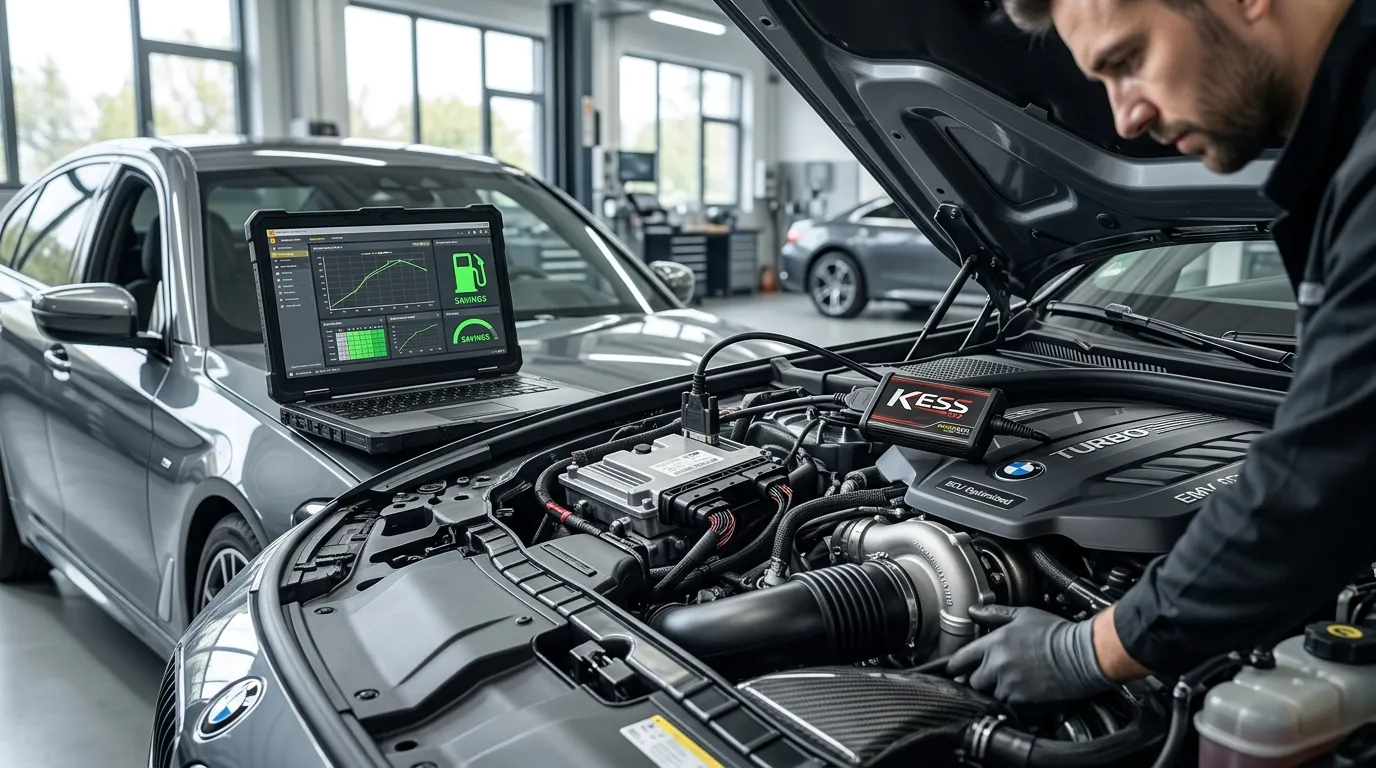
The technical side still needs precision. Clearing a Diagnostic Trouble Code (DTC) rarely fixes the fault: the ECU logic decides when the vehicle enters 'limp mode' or starts a regeneration, so the workshop reads the fault memory and the live data first. This is where a robust file service portal helps, connecting dealers with calibrated files and ECU data for over 67,000 vehicle variants.
How the DPF (Diesel Particulate Filter) Works and Why It Clogs
The DPF is designed to capture soot from the exhaust gas. However, short trips and urban driving often prevent the filter from reaching the temperatures required for regeneration. When a DPF fails, the engine suffers from high backpressure, leading to turbocharger wear and increased fuel consumption.
What a DPF-off Calibration Changes (Off-Road and Motorsport Only)
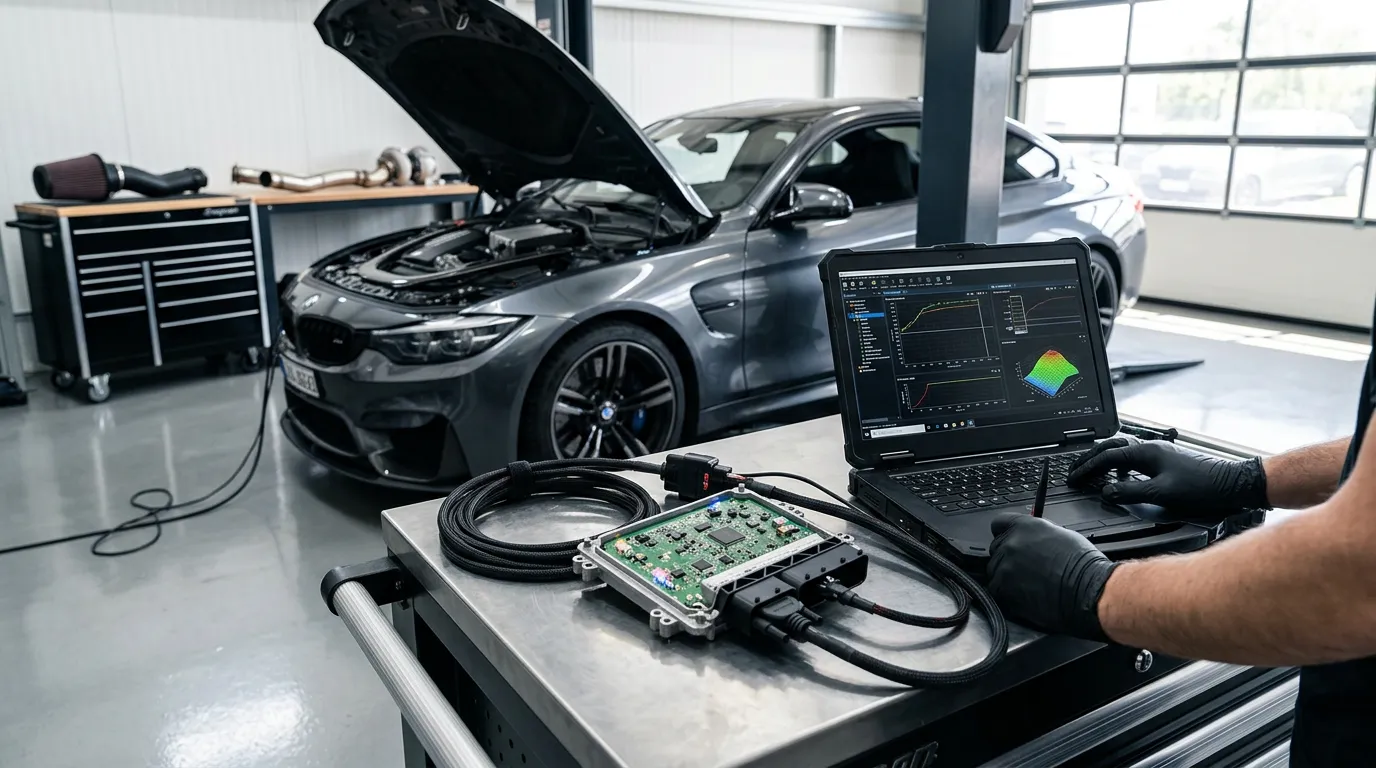
On an off-road or motorsport vehicle, a DPF-off calibration has two parts: the filter is taken out, and the ECU is told to stop monitoring the pressure and temperature sensors of the DPF. The file patches the DPF maps so the 'soot accumulation' logic is switched off without changing other engine safety parameters. On a road vehicle the same knowledge serves repair: these sensors and maps explain why a DPF does not regenerate.
- Sensor Management: Proper solutions often require leaving the sensors plugged in but disabled in the software to avoid circuit errors.
- Regeneration Maps: The software must completely bypass post-injection cycles used for heating the catalyst.
How the EGR Valve Works and Why It Fails
Exhaust Gas Recirculation (EGR) systems are notorious for carbon buildup in the intake manifold. By recirculating burnt exhaust gases back into the combustion chamber, the EGR reduces NOx emissions but sacrifices engine cleanliness and throttle response over time.
An EGR Off calibration closes the valve permanently in the ECU software, so only fresh air enters the cylinders and NOx emissions rise. It is for off-road and motorsport vehicles only; on a road vehicle a sticking or carboned EGR valve is cleaned or replaced.
How AdBlue and SCR Work and Why They Fail
AdBlue (SCR) systems are among the most fragile components in modern Euro 6 diesel engines. Failures in the NOx sensors, urea pumps or heaters can start a countdown and a 'no start' condition even when the engine itself is healthy. On a road vehicle the fix is to find the failed part and repair it. Our AdBlue/SCR guide covers the system in detail.
Stage 1, 2 and 3 With the Emission Equipment in Place
Performance tuning is a separate service from emission work. Within the ECU Tuning Portal, dealers can sort their services into three tiers; on a road vehicle every tier keeps the DPF, EGR and AdBlue/SCR systems fitted and working. Gains depend on the engine, ECU, fuel, hardware and measurement (dyno) conditions:
| Tuning Level | What Changes | Required Hardware | Emission Equipment on a Road Vehicle |
|---|---|---|---|
| Stage 1 | Software only | Stock / Original | Stays fitted and working |
| Stage 2 | Software and airflow parts | Intercooler, Downpipe | Stays fitted and working |
| Stage 3 | Software and major hardware | Hybrid Turbo, Injectors | Stays fitted and working |
No gain is guaranteed; measure every vehicle on a dyno before and after.
Stage 1: Software Only
Stage 1 remapping focuses on optimizing the manufacturer’s stock parameters. It is a software-only modification that adjusts fuel rail pressure, boost pressure, and ignition timing.
Stage 2: Pushing the Limits
Stage 2 requires hardware modifications, such as an intercooler and a high-flow downpipe, to manage the increased heat and exhaust flow. Higher exhaust gas temperatures (EGTs) put more load on the DPF and the catalytic converter, so a Stage 2 calibration has to keep EGTs inside the limits those parts can take.
Stage 3: The Peak of Performance
Stage 3 tuning is bespoke. It involves upgrading the turbocharger, fuel pump, and cooling systems. At this level, the ECU Tuning Portal’s ability to handle custom file requests is crucial. Tuners must manually calibrate the software to match the specific flow characteristics of the new hardware.
How ECU Tuning Portal Empowers Dealers
Managing a chiptuning business requires more than just technical knowledge; it requires an efficient workflow. The ECU Tuning Portal is a B2B white-label solution designed for file providers who want to scale. For a one-time license fee of €699, you get the source code (the core service component is IonCube-encoded).
- 67,000+ Vehicle Database: Never turn away a customer. Our software includes a massive pre-loaded database to help you identify the correct ECU and protocol for almost any vehicle on the road.
- Multi-Language Support: With 25 languages included, you can expand your dealer network globally without communication barriers.
- Automated Payments: Integrated payment gateways allow your dealers to buy credits and download files 24/7, so sales continue outside your working hours.
"Owning your source code means you aren't just a subscriber to a service; you are the owner of your infrastructure. This is the ultimate competitive advantage in the tuning industry."
Practical Tips for Emission Faults and Tuning
To succeed as a dealer, you must prioritize quality and safety. Here are a few practical tips:
- Always Perform a Pre-Tune Diagnostic: Before any repair or Stage 1 tune, scan the vehicle for existing faults. A tune will not fix a mechanical failure like a boost leak.
- Use Logged Data: After writing the file, use a diagnostic tool to log boost and EGTs. Ensure the values stay within the safe limits defined by the ECU Tuning Portal’s calibration team.
- Explain the Law: Tell your clients plainly that removing or disabling a DPF, EGR or AdBlue/SCR system on a road vehicle is illegal in the EU, the UK, the US and most other markets; emission-off calibrations are for off-road and motorsport vehicles only.
- Backup the Original: Always save the original ECU read before applying any modifications. The ECU Tuning Portal automatically stores these for your dealers.
Frequently Asked Questions
Can a Stage 1 tune fix a clogged DPF?
No. A Stage 1 tune does not repair a clogged DPF. Find out why the filter does not regenerate (driving pattern, a faulty sensor, injectors, EGR), clean or replace it, then tune with the DPF in place. A file that removes the DPF is for off-road and motorsport vehicles only.
Does an AdBlue SCR Solution cause the vehicle to fail emissions tests?
Yes. Without urea dosing the vehicle no longer neutralizes NOx, so its tailpipe emissions no longer meet road emission standards. This calibration is for motorsport and off-road competition vehicles only, and dealers should tell their clients so.
Why should I choose the ECU Tuning Portal software over a monthly subscription?
Monthly subscriptions drain your profits over time. With our €699 one-time license, you get the source code (the core service component is IonCube-encoded). There is no monthly licence fee and no per-file fee. Hosting, API and extra update years start in the second year and are optional: you pay only if you use them. You keep complete control over your data and can brand the portal as your own.
What ECUs are supported for these solutions?
Our database covers a vast range of ECUs, including Bosch EDC17, MD1, MG1, Continental SID, and Delphi DCM series. Whether it's a passenger car, truck, or tractor, the ECU Tuning Portal handles the file management effortlessly.
Conclusion
Knowing how DPF, EGR and AdBlue/SCR systems work and why they fail lets a workshop diagnose and repair them on road vehicles, and keeps emission-off calibrations to off-road and motorsport vehicles that never drive on public roads. The ECU Tuning Portal gives your dealers one place to request files, share ECU reads and keep the original reads.
To see what the portal costs, read the ECU Tuning Portal plans and prices.