Comparison
Stage 1 vs Stage 2 Tuning: Performance Differences Explained
Explore the Stage 1 vs Stage 2 tuning farkları in our guide. Learn about hardware, power gains, and chiptuning solutions. Start your tuning business today!
Explore the Stage 1 vs Stage 2 tuning farkları in our guide. Learn about hardware, power gains, and chiptuning solutions. Start your tuning business today!
In the rapidly evolving world of automotive performance, enthusiasts and professional tuners alike often find themselves debating the progression of vehicle modifications. Understanding the Stage 1 vs Stage 2 tuning farkları (differences) is essential for anyone looking to optimize their engine's potential while maintaining reliability. Whether you are a car owner looking for more throttle response or a business owner utilizing professional chiptuning portal software to manage a dealer network, knowing the technical nuances between these two stages is the foundation of successful remapping.
Defining Stage 1 Tuning: The Software Revolution
Stage 1 tuning is primarily a software-based modification. It is designed to work with a completely stock vehicle, meaning no mechanical upgrades are required. The primary goal of a Stage 1 remap is to optimize the manufacturer’s stock parameters to unlock hidden performance that was left on the table for various reasons, such as fuel quality variations across different global markets or insurance grouping constraints.
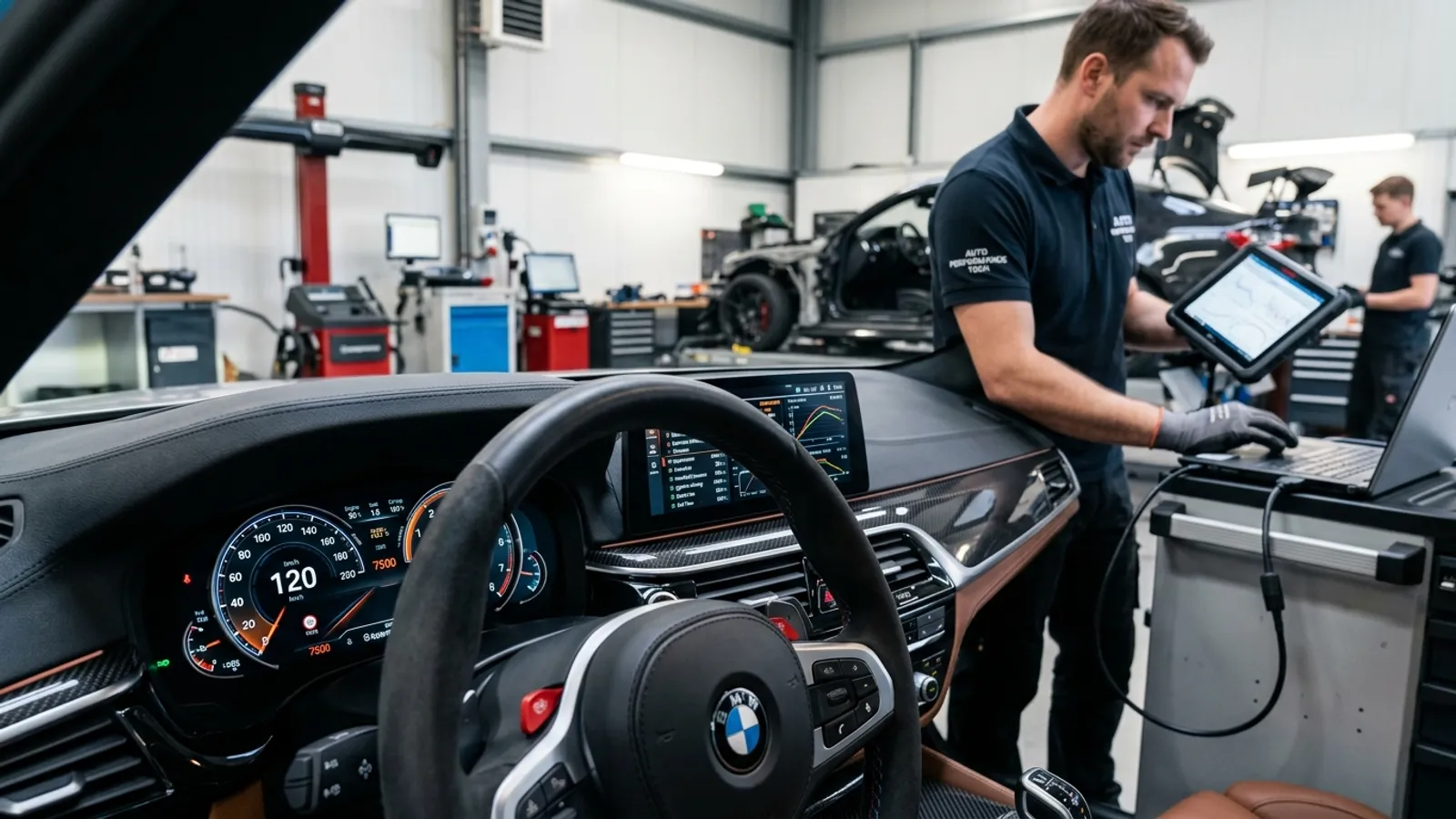
During a Stage 1 session, a tuner will modify several key maps within the Engine Control Unit (ECU). These typically include ignition timing, fuel injection duration, and boost pressure for turbocharged engines. By refining these parameters, the engine operates more efficiently. For most modern turbocharged petrol and diesel engines, a Stage 1 remap can provide a performance increase of 15% to 30% without compromising the longevity of the engine components. It is the most popular choice for daily drivers because it offers a significant boost in torque and horsepower while often improving fuel economy under light driving conditions.
Stepping Up to Stage 2: Beyond the Software
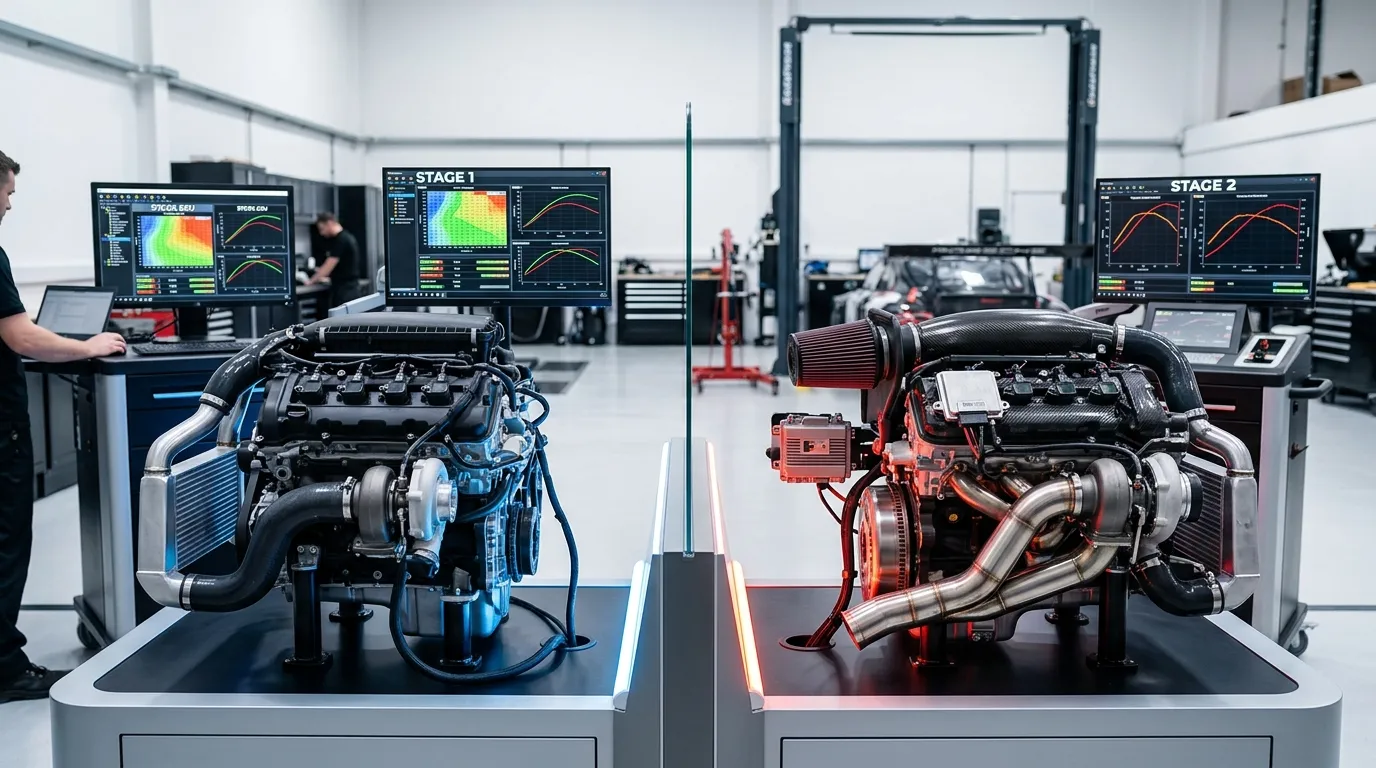
When discussing the Stage 1 vs Stage 2 tuning farkları, the conversation shifts from pure software to a combination of high-performance hardware and specialized calibration. Stage 2 tuning is designed for those who have reached the limit of what the stock hardware can handle. To safely move to Stage 2, certain physical bottlenecks in the engine's breathing and cooling systems must be addressed.
The most common hardware requirements for Stage 2 include:
- Upgraded Exhaust/Downpipe: Often a high-flow sports cat or a cat-less downpipe to reduce backpressure and lower Exhaust Gas Temperatures (EGT).
- Performance Intake System: To allow the turbocharger to draw in a larger volume of air with less restriction.
- Uprated Intercooler: Essential for keeping intake air temperatures low, especially during repeated pulls or track use.
From a software perspective, a Stage 2 remap is more aggressive. Because the hardware can now dissipate heat more effectively and flow more air, the tuner can increase boost levels further and adjust timing to take advantage of the reduced backpressure. This results in a broader power band and a much more aggressive exhaust note.
The Technical Comparison: Stage 1 vs Stage 2 Tuning Farkları
To help you visualize the differences, we have compiled a technical comparison table based on standard industry data for a typical 2.0L turbocharged engine.
| Feature | Stage 1 Tuning | Stage 2 Tuning |
|---|---|---|
| Hardware Required | None (100% Stock) | Downpipe, Intake, Intercooler |
| Power Increase | 15-25% over stock | 25-40% over stock |
| Reliability | Very High (OEM Limits) | High (Requires quality parts) |
| Installation Time | 30-60 minutes (OBDII) | 4-8 hours (Hardware + Map) |
| Cost Factor | Low to Moderate | High (Parts + Labor) |
Air-Fuel Ratio (AFR) and Heat Management
One of the critical Stage 1 vs Stage 2 tuning farkları lies in how the ECU manages heat. In a Stage 1 setup, the stock catalytic converter creates significant heat soak if boost is pushed too high. In Stage 2, the high-flow downpipe allows these gases to exit faster. This allows the tuner to lean out the fuel mixture slightly in some areas for power, or richen it up for component protection, without reaching dangerous EGT levels. For professional tuners using a brand identity file service portal, providing specific files for these hardware configurations is vital for customer satisfaction.
The Role of Tuning Portal Software in Managing Stages
For chiptuning businesses, managing the different requirements of Stage 1, Stage 2, and even Stage 3 files can be an administrative nightmare without the right tools. This is where a dedicated chiptuning portal becomes an invaluable asset. If you are running a dealer network, you need a system that can automatically identify the vehicle, list the available stages, and handle the file exchange seamlessly.
ECU Tuning Portal provides a robust B2B solution for this exact purpose. With a database of over 66,000 vehicles, the software allows your dealers to upload their stock reads and request specific stages. The portal manages the credits, the file versions, and even the technical logs. Since the portal comes with full PHP source code ownership for a one-time fee of €499, it is the most cost-effective way to scale a tuning business without recurring monthly costs.
Key Features for Managing Tuning Stages:
- Automatic File Identification: Instantly recognize the ECU type and software version.
- Stage Categorization: Clearly define Stage 1 vs Stage 2 options for your dealers.
- WinOLS Integration: Seamlessly connect your tuning project database to your customer-facing portal.
- Multi-Language Support: With 24 languages supported, you can explain the tuning farkları to clients worldwide.
Practical Advice for Selecting the Right Stage
Deciding between Stage 1 and Stage 2 depends on your goals and budget. If you value a warranty-friendly (in some cases) and simple performance boost, Stage 1 is the gold standard. It provides the best "bang for your buck." However, if you are a performance enthusiast who plans to take your car to the track or wants the distinct sound of an aftermarket exhaust system, Stage 2 is the logical progression.
It is important to remember that Stage 2 requires a higher level of maintenance. You should consider more frequent oil changes and spark plug intervals, as the engine is operating closer to its mechanical limits. Furthermore, ensure that your tuner uses high-quality files. Poorly calibrated Stage 2 files can lead to overboost issues or turbocharger failure if the wastegate duty cycles are not managed correctly.
Internal Linking Suggestions
To deepen your understanding of the chiptuning industry, consider exploring these related topics:
- How to set up your own Chiptuning Dealer Network (Anchor: dealer network management)
- The importance of a 66,000+ vehicle database in tuning (Anchor: vehicle database)
- Why full source code ownership matters for tuning portals (Anchor: PHP source code ownership)
Frequently Asked Questions about Tuning Stages
Can I skip Stage 1 and go straight to Stage 2?
Yes, you can go straight to Stage 2, provided you have installed the necessary hardware modifications (downpipe, intake, etc.). You do not need to have previously installed a Stage 1 map to move to Stage 2.
Does Stage 2 tuning ruin engine reliability?
When done correctly with high-quality hardware and a professional remap, Stage 2 is very reliable. However, it does put more stress on the turbocharger and cooling system than Stage 1.
What is the main difference in the 'Stage 1 vs Stage 2 tuning farkları' for diesel engines?
For diesels, the main difference is often the DPF (Diesel Particulate Filter). Stage 1 works with the DPF in place, while Stage 2 often requires a high-flow DPF or removal (where legal) to manage exhaust flow and soot levels.
Is a TCU tune necessary for Stage 2?
For vehicles with automatic transmissions (like DSG or ZF8HP), a TCU (Transmission Control Unit) tune is highly recommended for Stage 2 to increase torque limiters and clamping pressure to prevent clutch slip.
Conclusion: Maximize Your Business with ECU Tuning Portal
Understanding the Stage 1 vs Stage 2 tuning farkları is just the beginning. To successfully monetize this knowledge and provide world-class service to your clients, you need a professional platform to manage your operations. Generic file-sharing services are no longer enough for a growing tuning brand.
ECU Tuning Portal offers the ultimate brand identity solution for chiptuners who want full control. For a one-time payment of only €499, you get full PHP source code ownership, a massive vehicle database, and a system capable of handling thousands of dealers in 24 different languages. Don't pay monthly subscriptions for your own business growth. Invest in a platform that you own entirely. Ready to take your chiptuning business to the next level? Visit ECU Tuning Portal today and launch your professional file service platform in minutes!